Boots: the thing people get wrong
Crampons are steel frames that strap to a boot, and they need something rigid to grip. A soft sole flexes, the binding works loose, and the crampon comes off — which on ice is exactly the situation the crampon was preventing.
What operators ask for is consistent: stiff hiking boots that cover the ankle. What gets refused is equally consistent: trainers, running shoes, fashion boots, wellingtons and any soft low shoe. One operator states plainly that guests who are not properly dressed may be required to rent gear or, in extreme cases, be refused participation with the cancellation policy still applying.
If you own one thing, own the bootsEverything else on this page can be improvised from ordinary warm clothing. Footwear cannot. If you are buying anything for an Icelandic ice cave trip, buy boots with a stiff sole and ankle support, and walk them in before you travel.
Boot rental is widely available at meeting points, usually for a small fee — one operator lists it at 1,000 ISK. If you are travelling light or unsure whether your boots qualify, renting is a sensible plan rather than a fallback.
The three-layer system
Iceland's problem is rarely extreme cold; it is wind and water, often together, with long periods standing still. Three layers handle that better than one thick coat.
The shell matters more than visitors expect. Icelandic rain arrives horizontally and a jacket that copes with a British drizzle will not cope with a South Coast squall. Waterproof trousers are the most commonly skipped item and the one people most regret skipping.
Extremities
- Gloves — two pairs. Thin liner gloves under a warmer waterproof pair. This lets you handle a camera or phone without exposing bare skin, which stops working within minutes at freezing point.
- Hat. A warm one that fits under a helmet. Test this before you travel if the hat is bulky.
- Buff or neck gaiter. Cheap, tiny, and the single most effective thing against wind on an exposed glacier.
- Warm socks. Wool, one pair not two — doubling up compresses the sock and makes feet colder, not warmer.
What the operator supplies
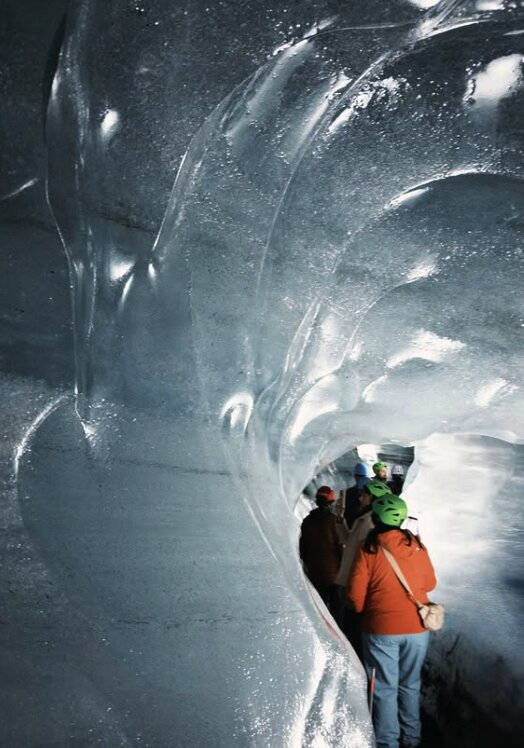
Standard across ice cave tours: crampons, a helmet, and frequently a headlamp and harness. Snowmobile and glacier truck tours add an insulated overall, balaclava and gloves, because you are exposed to wind chill on a moving machine.
Not supplied, on almost every tour: boots, clothing of any kind, food and drink. A handful of tours include snacks or lunch and say so; assume otherwise unless the listing states it.
Seasonal adjustments
Winter is the full kit, plus attention to standing still — you will be stationary in a cold cave for stretches, which is when people get cold rather than while walking. Summer changes less than expected: it is still around freezing inside a glacier and still windy outside, so the same layers apply with a lighter mid-layer.
Spring and autumn bring the wettest conditions and the most meltwater underfoot, which raises the value of genuinely waterproof boots and trousers over merely warm ones.
Cameras, phones and cold
Batteries drain fast in the cold, so keep a spare in an inside pocket where body heat reaches it. The bigger nuisance is condensation: carrying cold equipment straight into a heated vehicle fogs lenses and can trap moisture inside. Put the camera in a closed bag before you get back in.
This is also where liner gloves earn their place. Operating a phone with bare hands at freezing point is briefly possible and quickly miserable.
A packing list
- Stiff hiking boots with ankle support — or budget for rental
- Thermal base layer, top and bottom
- Fleece or wool mid-layer
- Waterproof and windproof jacket and trousers
- Liner gloves plus warm waterproof gloves
- Warm hat that fits under a helmet, and a buff
- Wool socks, one good pair
- Water and something to eat — rarely included
- Spare camera battery, kept warm