Why ice caves are guided-only in Iceland
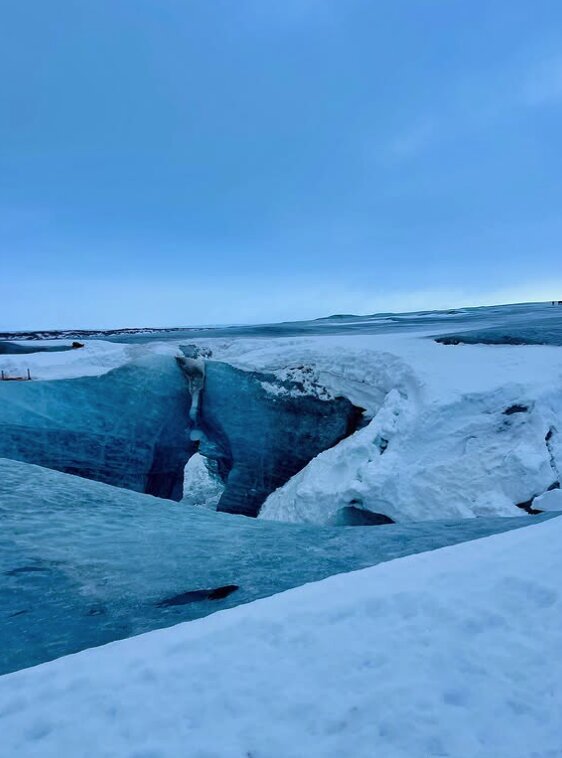
There is no walk-up access to any ice cave in Iceland, and this is not a commercial arrangement. A glacier is a moving body of ice riddled with crevasses, and a cave inside it is a void whose roof is held up by cold alone. Conditions change week to week and sometimes hour to hour.
Reaching the caves also means crossing glacial outwash plains and river beds where driving off marked roads is illegal in Iceland, so operators use modified super jeeps and glacier trucks. Guides are certified, know which caves are open, and carry the equipment that makes the visit routine rather than risky.
Never enter an ice cave unguidedCaves that look stable from the entrance collapse without warning, and meltwater channels can fill in minutes. People have died in Icelandic glacier accidents. If you find an unmarked cave while hiking, look at it from outside and leave it alone.
The real risks, in order
It is worth being specific, because the risks that worry visitors are not the ones that actually cause problems.
- The drive. Statistically the most dangerous part of any Icelandic ice cave day is the road, not the cave. Winter storms, black ice and high winds close the South Coast regularly, and a five-hour drive to Jökulsárlón in poor conditions is a real hazard.
- Flooding. Heavy rain or a warm spell can fill a cave with water within hours. This is the most common reason a cave closes at short notice.
- Falling ice and rock. Meltwater loosens fragments from cave roofs and glacier walls. Helmets are provided for exactly this, and are not optional.
- Crevasses. On the walk to and from a cave, snow can bridge a crevasse and hide it. This is why groups follow the guide's line rather than wandering to a better photograph.
- Slips. The dullest risk and the most likely injury. Uneven ice, gravel and meltwater underfoot, in crampons that take some getting used to.
What guides actually check
Operators inspect caves regularly through the season rather than assuming last week's assessment holds. They watch air temperature and rainfall, look at how much meltwater is running, check the roof and entrance for fresh fracturing, and judge whether the approach route is safe.
If a cave fails that assessment it is not used. In practice guides swap rather than cancel — the group is taken to another cave, an ice crevasse or a glacier walk instead. Where nothing safe is available the tour is rescheduled or refunded, and every tour listed on this site carries free cancellation up to 24 hours before departure.
Equipment, and what it is for
Operators supply crampons, a helmet and often a harness and headlamp. Crampons are steel spikes that strap to your boots and are the difference between walking on ice and sliding on it. The harness is used where a guide wants the group roped on an exposed section.
What operators do not supply is footwear. Crampons need stiff hiking boots that cover the ankle — trainers, wellingtons and soft low shoes will not hold a binding and are refused at meeting points. Most operators rent suitable boots, and some require it. The what to wear page covers this in detail.
Who should not go
Operators are consistent about this, and it is worth reading before booking rather than at the meeting point.
- Wheelchair users and anyone with significantly limited mobility. No ice cave tour in Iceland is wheelchair accessible.
- Pregnancy. Most operators advise against the super jeep tours specifically, because the off-road driving is genuinely jolting.
- Back or heart conditions. Same reason. Several listings state this explicitly.
- Young children. Minimum ages usually run from 6 to 10 depending on the tour. The Langjökull tunnel is the exception and takes any age with an adult.
- Claustrophobia or a fear of the dark. Some caves involve low passages and genuine darkness, and at least one operator flags this directly.
On the day
Arrive early — twenty to thirty minutes before departure is standard, because gear has to be fitted before the group can leave, and latecomers are not waited for. Listen to the briefing, keep the helmet on inside the cave, and stay on the guide's line rather than stepping aside for a photograph.
Tell the guide if you are struggling. Groups move at the pace of the slowest person by design, and guides would far rather adjust the route than deal with someone who pushed on quietly.
Reynisfjara: the other South Coast danger
Many ice cave day tours stop at Reynisfjara, the black sand beach near Vík, and it deserves a specific warning. The beach is exposed to open Atlantic swell and produces sneaker waves — waves that run far higher up the sand than the preceding ones, without warning.
People have been killed there, including visitors who were simply standing on wet sand with their backs to the sea. Stay well above the waterline, never turn your back on the water, and treat the warning signs as literal rather than precautionary.