Can you visit an ice cave in Iceland in summer?
Yes — but only certain ones, and it is worth knowing which before you book. Natural ice caves are carved by meltwater and only stable when the glacier is cold. From roughly April onward they soften, flood and collapse, so the blue crystal caves of Breiðamerkurjökull are shut for the whole summer.
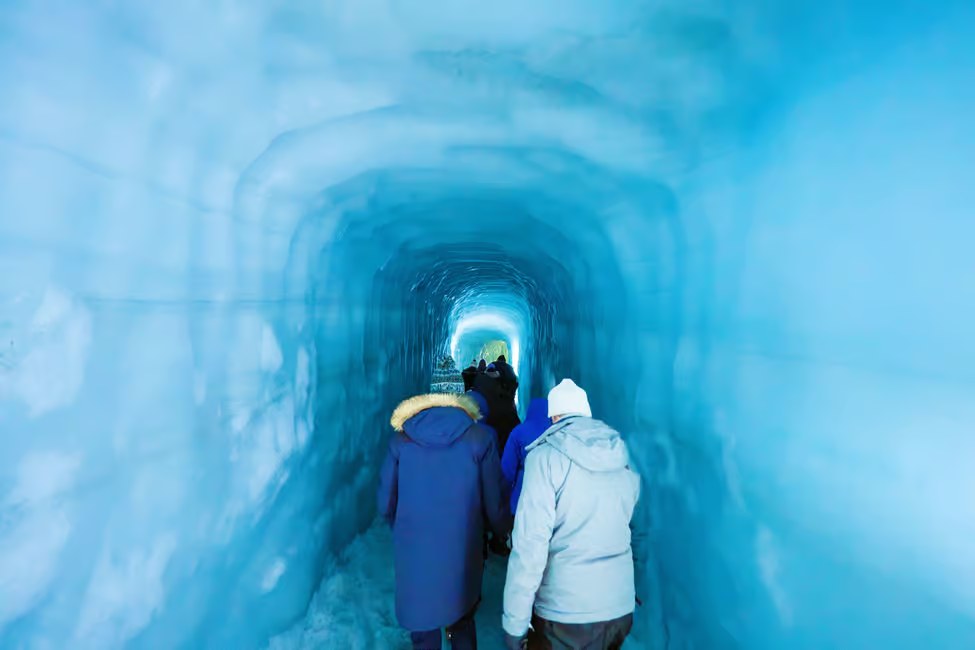
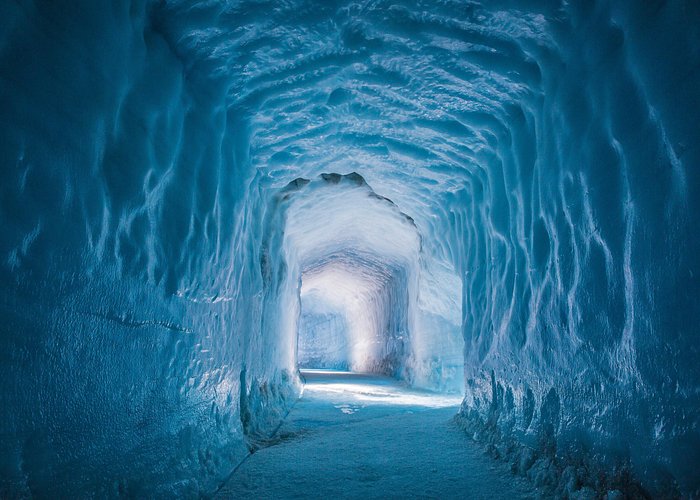
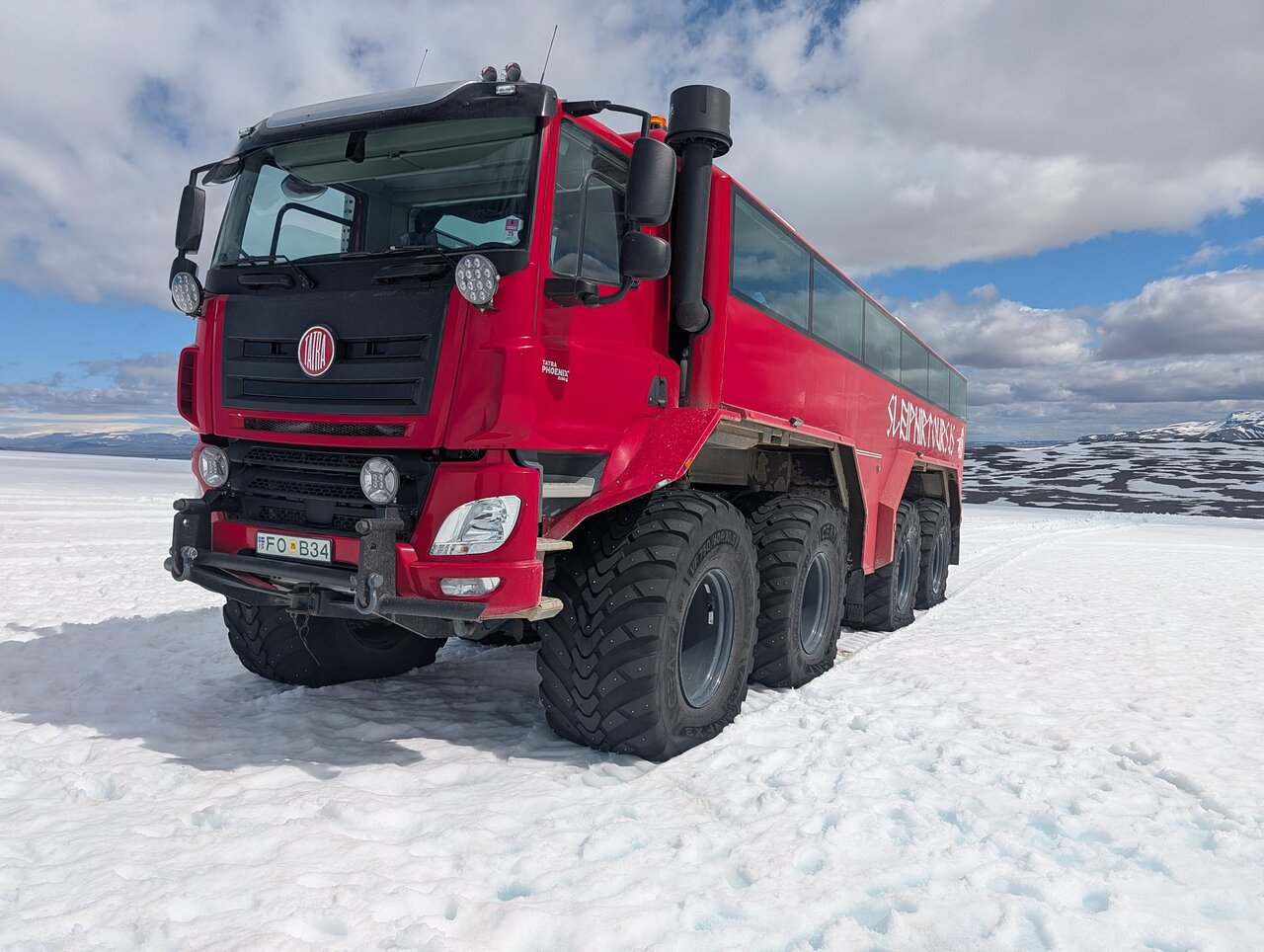
Two exceptions run every month. The Into the Glacier tunnel on Langjökull is man-made, bored into the ice cap and maintained year-round. The Katla cave under Mýrdalsjökull is natural but sits in a position stable enough to be visited in July as well as January.
What summer ice caves actually look like
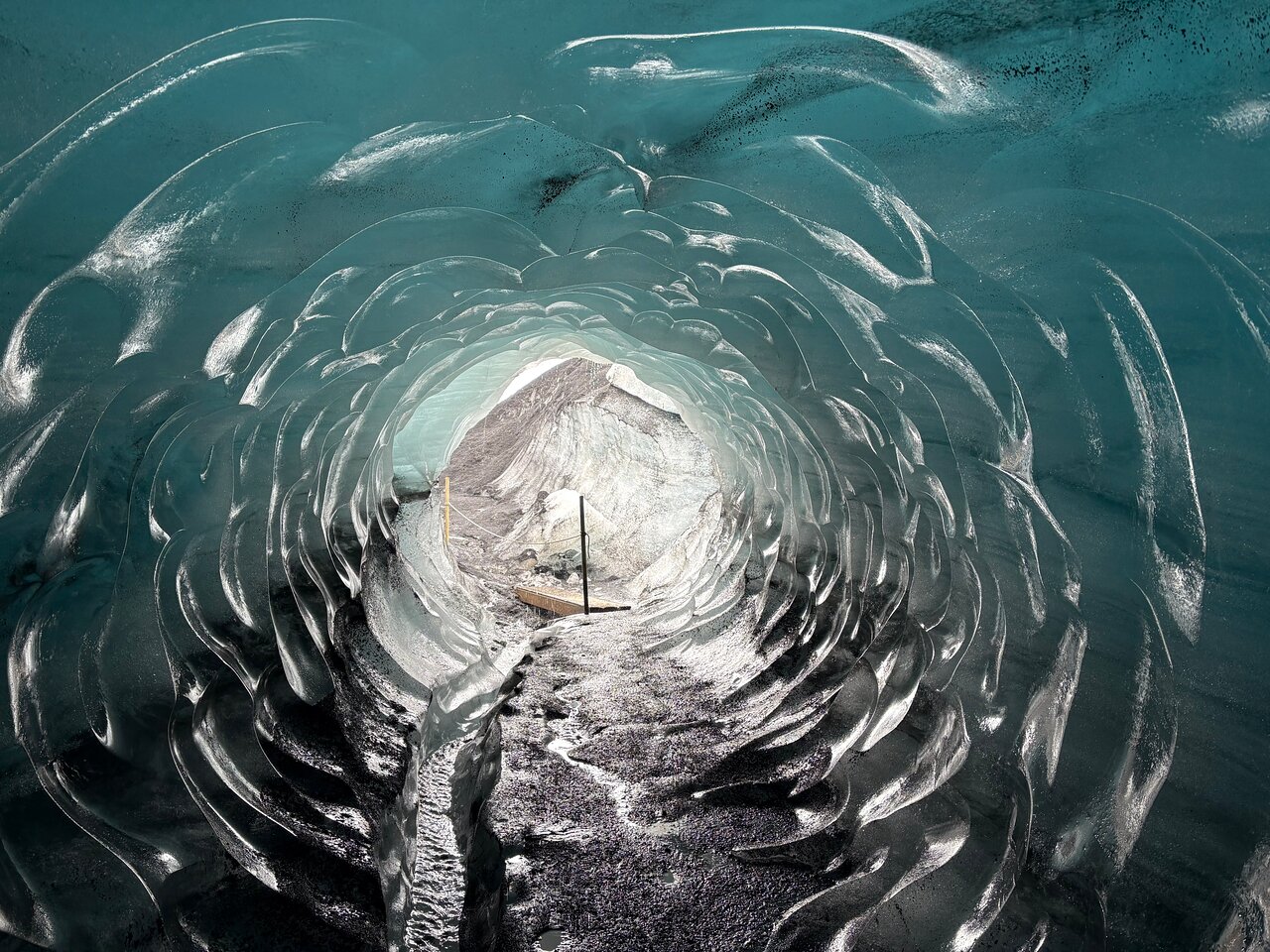
Set expectations correctly and summer is rewarding. The Langjökull tunnel is lit, spacious and consistent — blue-white corridors with visible layers of compressed snow and volcanic ash. It is the most predictable ice cave experience in Iceland, precisely because a machine cut it.
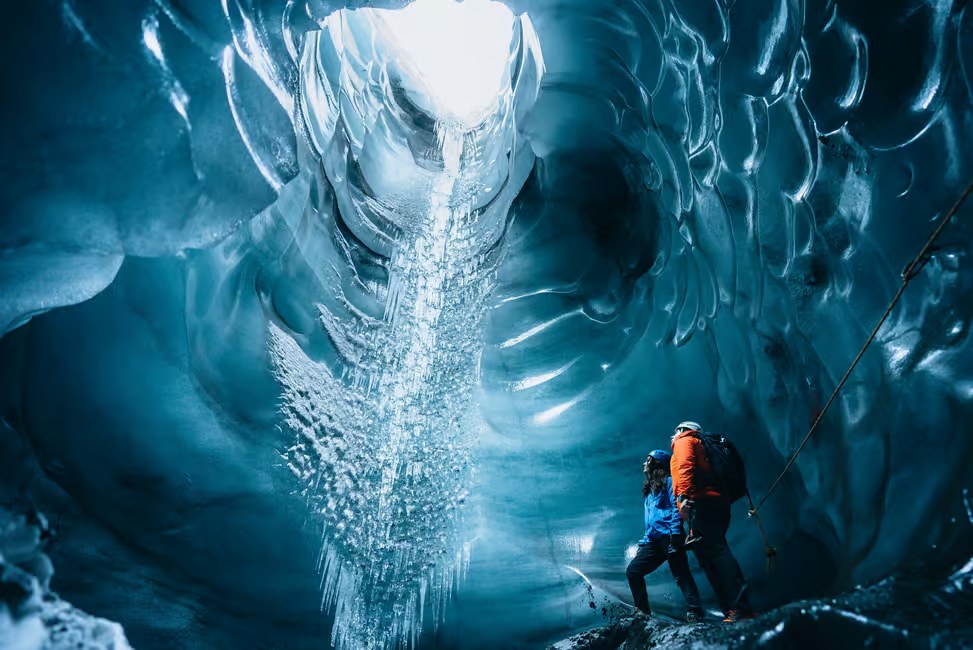
Katla is the opposite: rougher, darker and streaked black with ash from the volcano beneath it. Neither looks like the electric-blue photographs taken inside a winter crystal cave, and it is better to know that now than at the cave mouth.
Why summer is a good time to come anyway
Daylight is the obvious one. Around the June solstice the sun barely sets, which means tours run later, the drive to Vík or Húsafell is relaxed, and there is time to do a cave and something else in the same day.
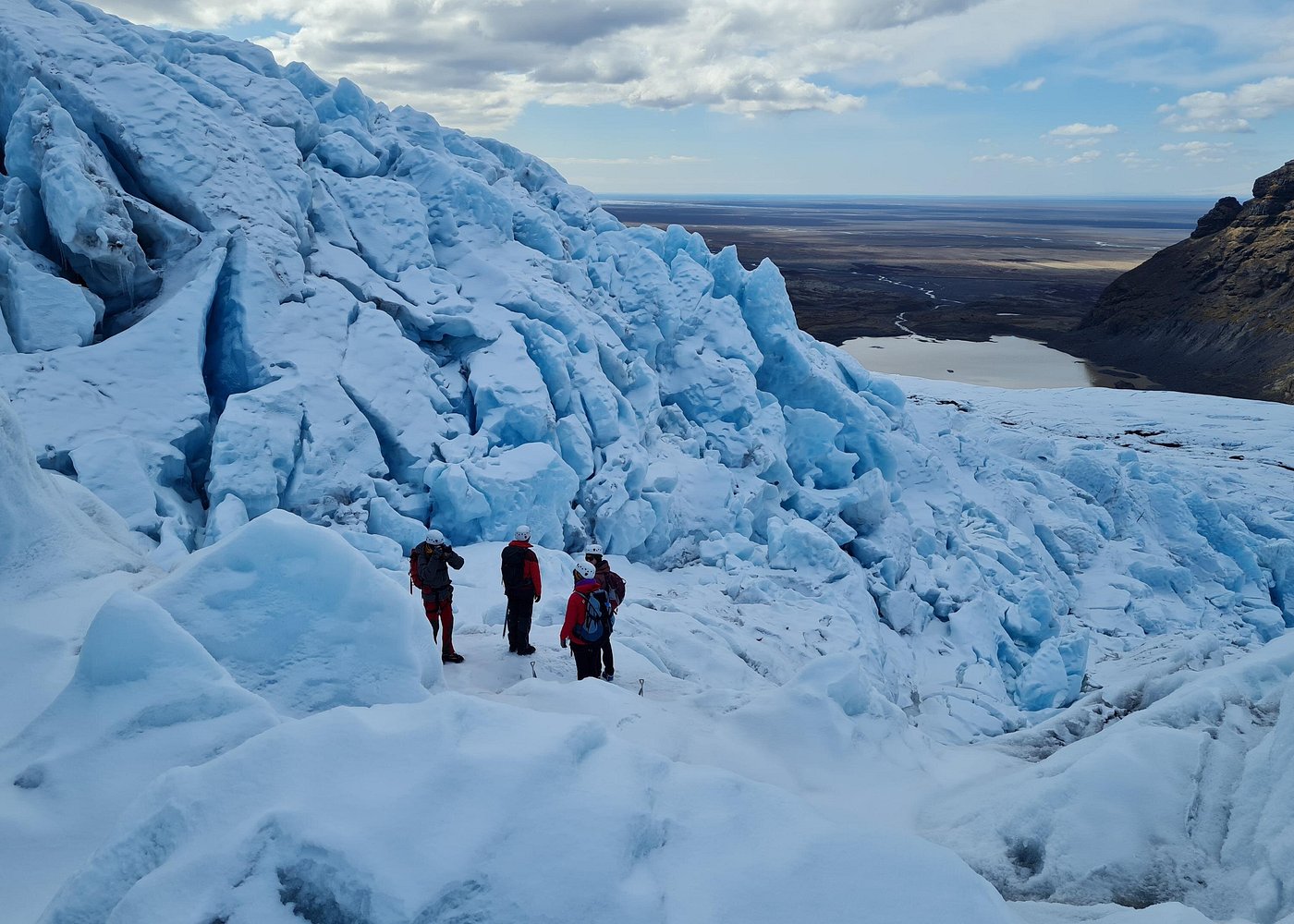
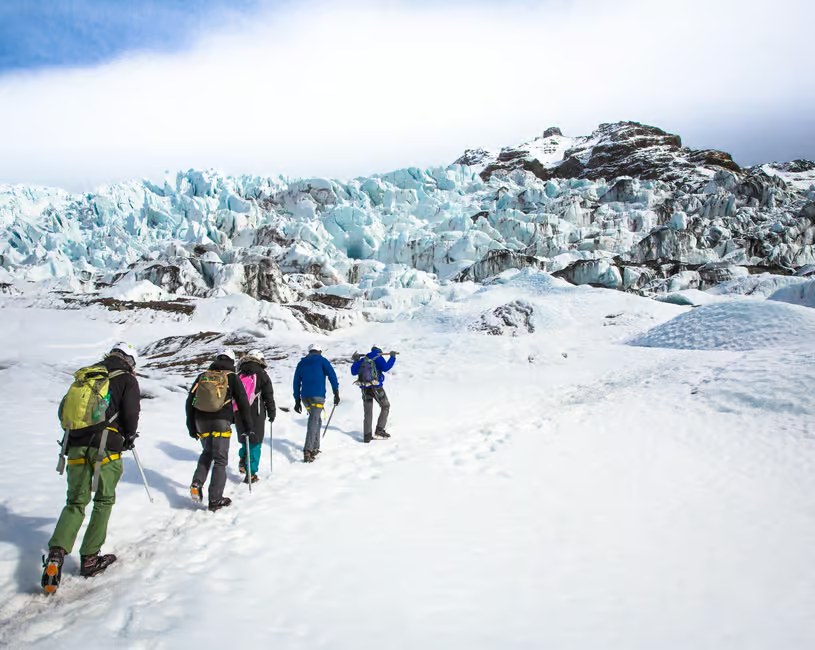
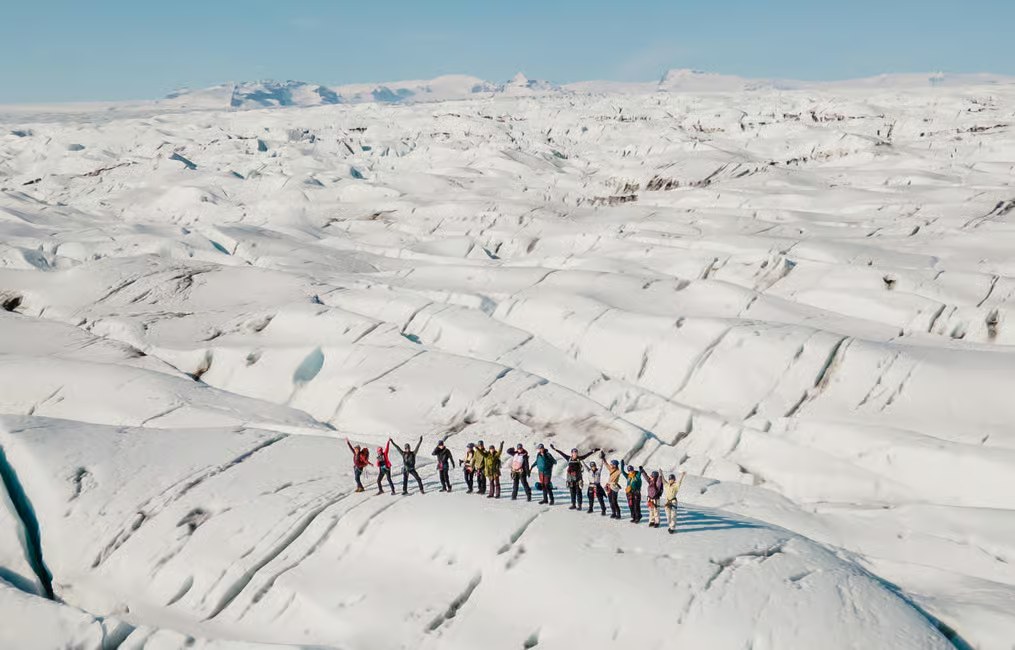
Roads are the other. Winter closures, ice and wind regularly disrupt South Coast trips; in summer the Ring Road is straightforward. Glacier hiking is also at its most approachable, with firmer footing underfoot and no need to fight the cold.
The trade-off is crowds and prices: summer is Iceland's peak season for visitor numbers and accommodation costs, even though the cave tours themselves cost much the same year-round.
Planning a summer ice cave trip
For the shortest journey from Reykjavik, Húsafell is about two hours and Vík about two and a half. Both can be done as a day return, and both have tours that include transfer if you are not driving.
Dress for the ice, not the weather outside. Summer air temperatures on the South Coast rarely climb far, and it is cold inside a glacier regardless of the month — warm layers, a waterproof and proper footwear still apply in July.