Ice Caves ToursIceland
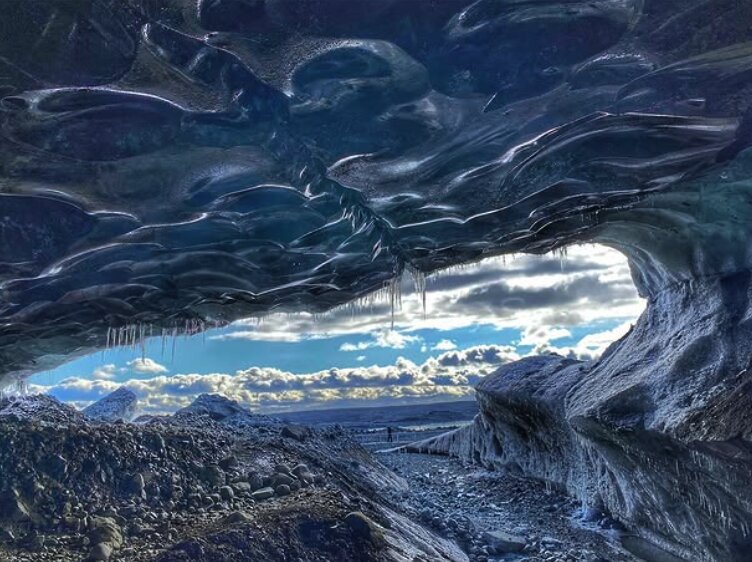
View out of an ice cave mouth across an open glacial plain in Iceland

Planning guide

Plan Your Iceland Ice Cave Trip

Most ice cave disappointments are planning problems, not tour problems — the wrong month, the wrong base, or a five-hour drive nobody accounted for. This page covers the decisions that actually change the trip.

4 decisionsMonth, base, cave, format
~2–5 hrsReykjavik to the caves
From $157Lowest cave tour

Decision one: which month

This decides everything else, because it decides which caves exist. Natural ice caves are a winter feature; two ice caves run year-round. Get this wrong and no amount of budget fixes it.

MonthNatural blue cavesYear-round cavesNotes
June – AugustClosedOpenMidnight sun, easy roads, peak prices
SeptemberClosedOpenAurora returns, crowds thin out
OctoberUsually not yetOpenSeason about to start; good for crevasse walks
NovemberUsually openOpenSeason opens; roads still reasonable
December – MarchOpenOpenPeak season, bluest ice, worst weather
AprilOften to mid-monthOpenSeason closing; book the first half

If the deep blue crystal caves are the reason for the trip, that means November to March, often stretching into early or mid-April. If the dates are fixed outside that window, the Katla cave and the Langjökull tunnel are the two that still run — see the seasons guide for the month-by-month detail.

Decision two: where to base yourself

Almost everyone defaults to Reykjavik, and for an ice cave that is usually the wrong answer. The capital is nowhere near the caves. The nearest is about two hours away and the famous ones are five, each way.

BaseNearest caveDriveTour length
ReykjavikLangjökull tunnel via Húsafell~2 hrs10–12 hrs
ReykjavikKatla cave via Vík~2.5 hrs11–12 hrs
ReykjavikCrystal caves at Jökulsárlón~5 hrs12–14 hrs
VíkKatla cave~10 min3 hrs
SkaftafellSkaftafell caves and hikesOn site3–5 hrs
Höfn / JökulsárlónCrystal cavesAt the lagoon2.5–4 hrs
The single best change you can makeSpend one night in Vík. It converts a twelve-hour day tour into a three-hour morning, and leaves the rest of the day for Reynisfjara, D&yrhólaey and the waterfalls. It is the highest-value decision on this page.

Decision three: which cave

There are three genuinely different experiences, and they are not interchangeable.

  • Crystal caves at Breiðamerkurjökull — the deep blue ones from the photographs. Winter only, five hours from Reykjavik, and the most weather-dependent.
  • Katla cave under Mýrdalsjökull — natural, year-round, and streaked black with volcanic ash rather than blue. Closest natural cave to the capital.
  • Into the Glacier on Langjökull — a man-made tunnel, lit and maintained, open every month. The most predictable and the most family-friendly.

A fourth option is worth knowing about when caves are shut: the blue-ice maze and crevasse walks on Falljökull thread between walls of blue ice year-round, and deliver a good part of the same feeling. They are covered on the glacier hike page.

Decision four: day tour, overnight or multi-day

A day tour from Reykjavik works for Katla and Langjökull and works badly for Jökulsárlón. An overnight along the South Coast is the best value change for a cave-focused trip. A two-day tour is the sensible way to reach the crystal caves in winter without driving the South Coast yourself.

One caveat on multi-day trips: check which cave is actually included. On the two-day South Coast tour the operator states it usually visits the Crystal Cave, with Katla as the alternative when that one is inaccessible, and a six-day ring road tour includes a cave only from October to mid-April.

What it costs

TypeTypical priceWhat drives it
Cave tour from Vík or Jökulsárlón$157 – $195Group size and departure point
Full-day cave tour from Reykjavik$290 – $308Transport and South Coast stops
Langjökull ice tunnel$194 – $292Húsafell start versus full day from the capital
Glacier hike$96 – $221Group size; cave combinations cost more
Two-day South Coast with caveFrom ~$651Hotel and breakfast included

Prices barely move by season — a cave tour costs much the same in January as in July. What changes is flights and accommodation, which peak in summer and over Christmas. Group size is the main lever on tour price: the cheapest tours run larger groups, and paying more usually buys a cap of eight to fourteen.

Booking, cancellation and slack

Every tour listed on this site offers free cancellation up to 24 hours before departure, which makes early booking essentially risk-free. Small-group tours capped at twelve to fourteen fill first, particularly over Christmas and in February.

Never book a cave for your last dayWeather closes roads and floods caves at short notice, and operators reschedule rather than run something unsafe. If the cave is on the day before your flight, there is no room to move it. Put it early in the trip.

What can go wrong, and what happens then

Three things account for most disruption. Weather closes South Coast roads in winter. Warm spells and heavy rain flood caves, sometimes overnight. Ice movement makes a cave that was fine last week unsafe this week.

Operators generally swap rather than cancel: guides move the group to a different cave, an ice crevasse or a glacier walk. Where nothing safe is available, tours are rescheduled or refunded. Knowing this in advance takes the sting out of a change on the day, and it is why the itinerary needs slack.
Good to know

Ice cave trip planning FAQs

How many days do I need for an Iceland ice cave trip?
For the Katla cave or the Langjokull tunnel, a single day from Reykjavik works. For the crystal caves at Jokulsarlon, allow two days or stay overnight along the South Coast.
When should I visit Iceland for ice caves?
November to March for the natural blue caves, often stretching into early or mid-April. Katla and Langjokull run year-round, so summer visitors still have two genuine options.
Where is the best place to stay for an ice cave?
Vik, if the Katla cave is the target, since it is about ten minutes away. For the crystal caves, stay near Hofn or Skaftafell rather than driving five hours from Reykjavik.
How far in advance should I book?
A few days is usually enough outside peak weeks. Over Christmas and in February the small-group tours fill well ahead. Free cancellation up to 24 hours before makes booking early low-risk.
How much does an ice cave tour cost?
From about $157 for a larger-group departure to roughly $308 for a full day from Reykjavik. Multi-day trips with a cave included start around $651.
Can I drive to an ice cave myself?
No. Every cave is guided-only, reached by super jeep or glacier truck across terrain where off-road driving is illegal. You can drive to the meeting point but not to the cave.
Is a day trip from Reykjavik to Jokulsarlon worth it?
It is a twelve to fourteen hour day with about ten hours of travel. It can be done, but an overnight or a two-day tour is a far better experience for the same money.
What if the cave closes after I book?
Operators usually switch to another cave, a crevasse or a glacier walk rather than cancelling. If nothing is safe, the tour is rescheduled or refunded.
Do I need travel insurance?
It is sensible. Weather disruption in Iceland is routine, and insurance covers the knock-on costs that a tour refund does not, such as an unused night's accommodation.
Can children go on an ice cave tour?
Often. Minimum ages usually fall between 6 and 10, and the Langjokull tunnel accepts children of any age with an adult, which makes it the family choice.
Is an ice cave tour worth the money?
For most visitors yes, provided expectations are right. The common complaint is not the price but the gap between the marketing photographs and a real cave, which is smaller and darker.
Should I book a cave and a glacier hike separately?
Several tours combine both, which is good value. Booking separately makes sense if you want a longer walk than the combination tours offer, or if you are visiting when caves are shut.