The short answer
Visiting in summer? Katla or Langjökull. Want the deep blue cave from the photographs? Crystal, in winter, and budget a long drive. Travelling with young children? Langjökull.
Katla: the year-round natural cave
The closest natural ice cave to Reykjavik, open every month, and dramatic in a completely different way from the blue caves.
The Katla cave sits in Kötlujökull, an outlet of Mýrdalsjökull, directly above the Katla volcano. Ash from past eruptions is frozen into the ice in dark bands, so the walls are streaked black and grey. Tours leave from Vík, about ten minutes from the glacier, and a super jeep crosses the black sands of Mýrdalssandur to reach it.
- Choose it if: you are driving the South Coast, visiting outside winter, or want the shortest natural-cave trip from Reykjavik
- Skip it if: you specifically want the electric-blue cave from the photographs
- Watch for: reviewers noting the cave visit is short and much of the tour is spent in the jeep
It is also the only cave that fits a South Coast day tour alongside Seljalandsfoss, Skógafoss and Reynisfjara.
The Crystal caves: the ones in the photographs
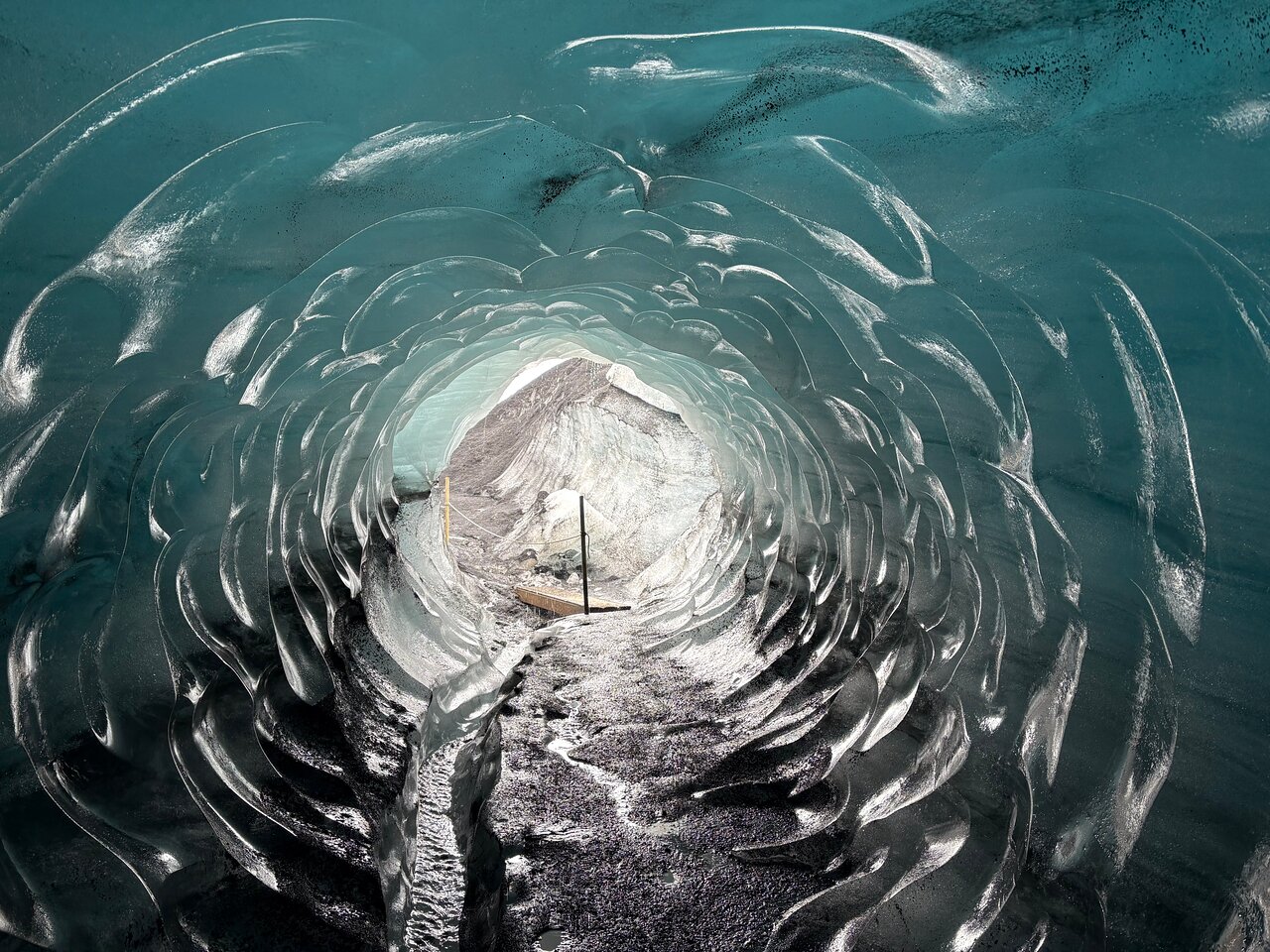
The deep blue caves in Breiðamerkurjökull near the Jökulsárlón lagoon. Winter only, and about five hours from Reykjavik each way.
These are what most people picture when they think of an Icelandic ice cave, and the ice really is that blue in midwinter. They are also the most demanding to reach and the most weather-dependent, since the caves form fresh each year and can close at short notice.
- Choose it if: you are travelling between roughly November and March and the blue ice is the point of the trip
- Skip it if: you are visiting April to October, or cannot spare an overnight along the coast
- Watch for: group sizes, which range from 12 up to 28 depending on price, and crowding at the popular caves
Do not day-trip this from Reykjavik if you can avoid itJökulsárlón is about 380 km each way. A day return runs 12 to 14 hours with roughly ten of them travelling. Staying near Höfn or Skaftafell, or taking a two-day tour, is a far better use of the same money.
Langjökull: the man-made tunnel
Into the Glacier is a tunnel bored into the ice cap and maintained year-round. The most reliable and the most family-friendly option.
It is the answer for anyone visiting between May and October, when every natural blue cave in the country is shut. An eight-wheel-drive truck climbs onto the ice from Húsafell, and a guide leads the way through lit corridors past compressed snow layers and old ash.
- Choose it if: you are visiting in summer, travelling with children, or want a guaranteed cave regardless of weather
- Skip it if: the point is standing in something nature made
- Watch for: it being engineered rather than organic — some visitors find that less atmospheric
Children under 12 go free and teenagers pay half price, and the operator will tow small children on sleds, which no natural cave tour offers.
Decide by season
Season narrows the choice more than anything else. If your dates fall outside the natural cave season, no amount of budget changes the answer. See the seasons guide for the month-by-month picture.
Decide by base
Where you sleep matters more than most people expect, because it decides whether the cave is a morning or a whole day.
One night in Vík converts a twelve-hour day tour into a three-hour morning. It is the single highest-value change you can make to an ice cave trip.
What about combining a cave with a glacier hike?
Several tours do both, and it is usually better value than booking separately — but the cave half is conditions-dependent.
Combination tours from Skaftafell put you on Falljökull in crampons and then into a natural cave. If the cave is unsafe that day, the hike still runs. Treat the walk as the guaranteed part and the cave as the bonus, and the booking makes sense. Details on the glacier hike page.
The honest caveat that applies to all three
Natural caves are frequently smaller and darker than the marketing photographs suggest, and reviewers say so consistently.
The luminous blue in a listing image is usually a single opening shot on a wide lens. Inside, the same chamber reads smaller, greyer and rougher, with gravel underfoot. This is the most common disappointment in ice cave reviews and it is entirely avoidable by knowing it in advance. See the gallery for a more realistic picture.
Sources- Live operator listings for every tour compared, prices and group sizes verified 22 July 2026
- Paraphrased traveller reviews collected on the reviews page