Ice Caves ToursIceland
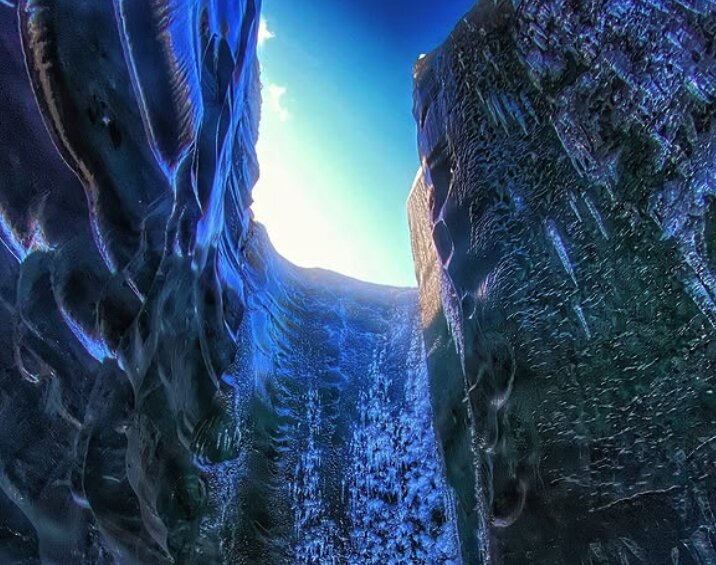
Deep blue ice walls rising to a strip of sky in an Icelandic glacier canyon

Month by month

Iceland Ice Cave Seasons Guide

Iceland's ice caves are not open all year, and the ones that are do not look like the photographs that sell them. This is the month-by-month picture — what is open, what is closed, and what that means for a trip built around seeing one.

Nov–MarNatural cave season
2 cavesOpen all year
5–24 hrsDaylight range

The short version

Natural ice caves run roughly November to March, often stretching into early or mid-April. Two ice caves run year-round: the Katla cave under Mýrdalsjökull and the man-made Into the Glacier tunnel inside Langjökull. Glacier hikes run every month everywhere.

Month by month

MonthNatural blue cavesDaylightWorth knowing
JanuaryOpen — peak~5–7 hrsBluest ice, worst weather, busiest over New Year
FebruaryOpen — peak~7–10 hrsPeak demand; small-group tours sell out
MarchOpen~10–13 hrsGood balance of ice quality and daylight
AprilOften to mid-month~13–16 hrsSeason closing; book the first half
MayClosed~17–20 hrsKatla and Langjökull only
JuneClosed~21–24 hrsMidnight sun; no northern lights
JulyClosed~20–22 hrsPeak visitor numbers and prices
AugustClosed~16–20 hrsAurora possible from late in the month
SeptemberClosed~11–14 hrsAurora returns; crowds thin
OctoberUsually not yet~9–11 hrsStrong aurora month; crevasse walks instead
NovemberUsually open~5–8 hrsSeason opens; roads still reasonable
DecemberOpen~4–5 hrsShortest days; festive-period demand

Each month has its own page with the tours that actually run: winter, November, April, October, September and summer.

Why natural caves close

An ice cave is not a permanent feature. Meltwater streams run through and under the glacier all summer, hollowing out channels; when the water drops away in autumn those channels are left empty. Once the ice is cold enough to hold its shape, they can be entered.

In spring the process reverses. The glacier warms, water returns to the channels, roofs that held all winter stop being safe, and operators close them. That is why the caves are a winter product and why every winter produces a different set of caves — last season's cave may simply not exist.

The two exceptions

The Katla cave in Kötlujökull is natural but sits in a position stable enough to visit year-round. Its ice is streaked black and grey with volcanic ash from the Katla volcano beneath, so it looks quite different from the blue crystal caves — and it is the closest natural cave to Reykjavik at about two and a half hours.

Into the Glacier on Langjökull is not a natural cave at all: it is a tunnel bored into the ice cap and maintained through the year. That makes it entirely independent of season and the most predictable ice cave in the country, as well as the most family-friendly.

If you are visiting between May and OctoberThese two are your options, and they are genuinely worth doing. What is not available at any price in those months is the deep blue crystal cave from the photographs. Anyone told otherwise is being sold something that does not exist.

Daylight, and why it matters more than temperature

Iceland's daylight swings from about four hours in late December to close to twenty-four in June. For a cave trip this matters twice over: it dictates how much can fit into a day, and it dictates the drive.

A five-hour drive to Jökulsárlón in December means leaving and returning in darkness. The same drive in March is comfortable. If the itinerary is tight, March and November are the two months that balance an open cave season against usable daylight.

Northern lights and ice caves together

The two overlap well, because cave tours run in daylight and the aurora appears at night — they do not compete for time. The aurora season runs roughly September to April, needing dark, clear skies.

The best overlap is therefore November to March, when the caves are open and the nights are long. September and October give good aurora chances but no natural caves, and by late April there is too little darkness.

Weather is the variable, not the calendar

Season sets what is possible; weather decides what happens. Warm spells and heavy rain flood caves within hours, and winter storms close the roads to reach them. Operators respond by swapping to another cave, a crevasse or a glacier walk, or by rescheduling.

Two practical rules follow. Build slack into the itinerary and never book a cave for the day before a flight home. And book early anyway, since every tour listed here has free cancellation up to 24 hours before departure, so an early booking costs nothing if plans change.
Good to know

Ice cave season FAQs

When is ice cave season in Iceland?
Roughly November to March for the natural caves, often continuing into early or mid-April. The Katla cave and the man-made Langjokull tunnel run all year.
Can you visit an ice cave in Iceland in summer?
Yes, but only the Katla cave and the Langjokull ice tunnel. The blue crystal caves are closed from roughly April until late autumn because they melt.
Why do the ice caves close in summer?
Natural caves are carved by meltwater and only hold their shape while the glacier is cold. As it warms, water returns to the channels and roofs become unsafe.
What month is best for ice caves?
February and March balance reliable cave conditions with reasonable daylight. January has the bluest ice and the worst weather; November has smaller groups and better roads.
Is the ice bluer at certain times of year?
Yes. Cold, dense winter ice with few air bubbles produces the strongest blue. By spring, warmer ice and meltwater make the colour less reliable.
How much daylight is there in winter?
About four to five hours around the December solstice, rising to roughly ten by early March. Tours are scheduled around it, but December days are genuinely short.
Can I see the northern lights and an ice cave on the same trip?
Yes, and they fit together well since cave tours run by day and the aurora appears at night. November to March gives both.
When does ice cave season start?
Usually November, once the glacier has been cold long enough for the caves to refreeze and stabilise. There is no fixed date, because it depends on the weather.
When does ice cave season end?
Usually around mid-April, earlier in a warm spring. Operators close each cave on the guides' judgement rather than to a calendar.
Are ice cave tours cheaper out of season?
The tours themselves cost much the same year-round. Flights and accommodation are what change, peaking in summer and over the festive period.
Which cave is open in July?
The Katla cave under Myrdalsjokull and the man-made Into the Glacier tunnel on Langjokull. Both run every month of the year.
Do glacier hikes run all year?
Yes, every one listed on this site. They are the reliable option in the months when natural caves are closed, and the blue-ice maze walks come closest to a cave experience.
Is it worth visiting in October?
For glacier walks and the northern lights, yes. For a natural blue cave it is a gamble, since the season usually starts the following month.
How far ahead should I book for peak season?
Well ahead for Christmas and February, when small-group tours capped at twelve to fourteen fill first. Free cancellation up to 24 hours before makes early booking low-risk.