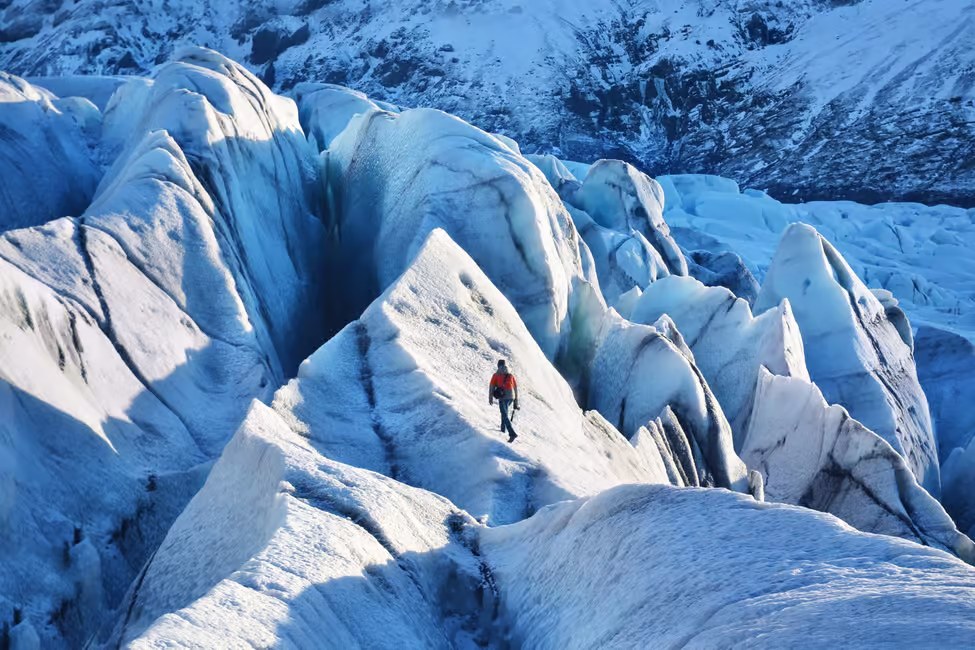
Where glacier hiking happens in Iceland
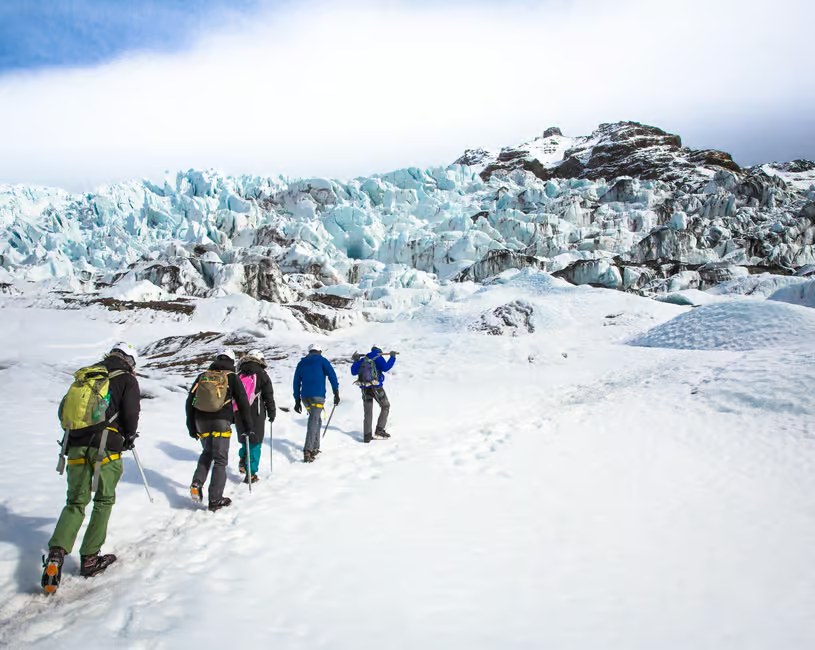
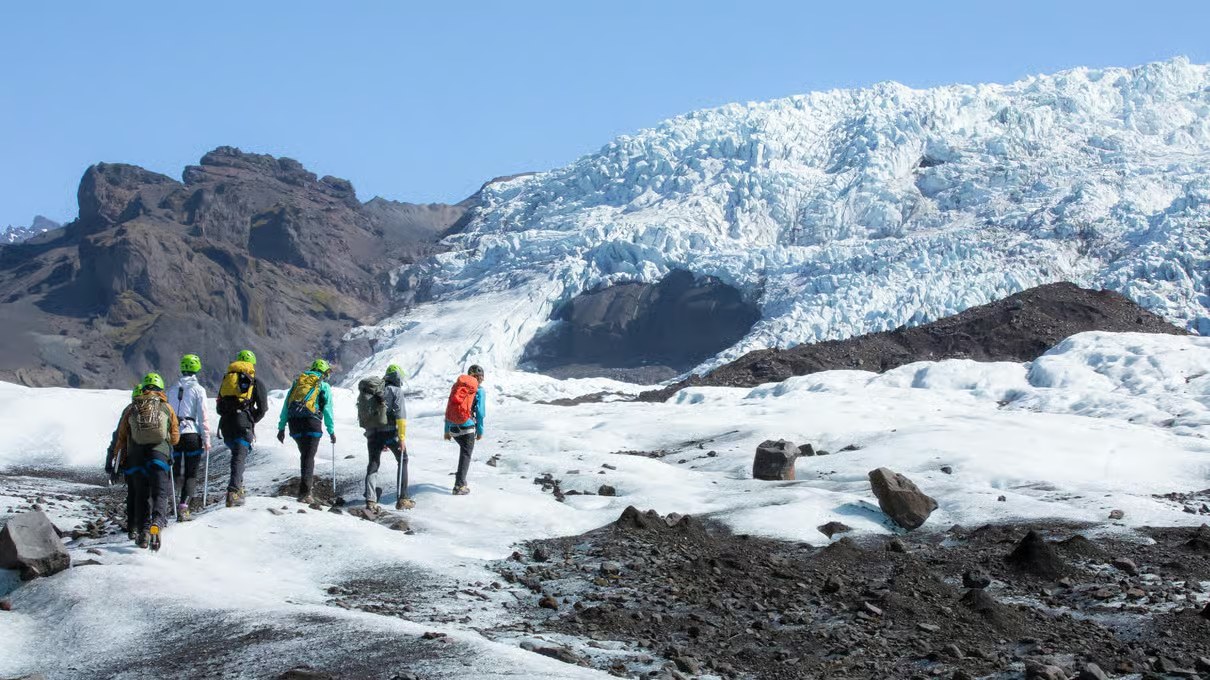
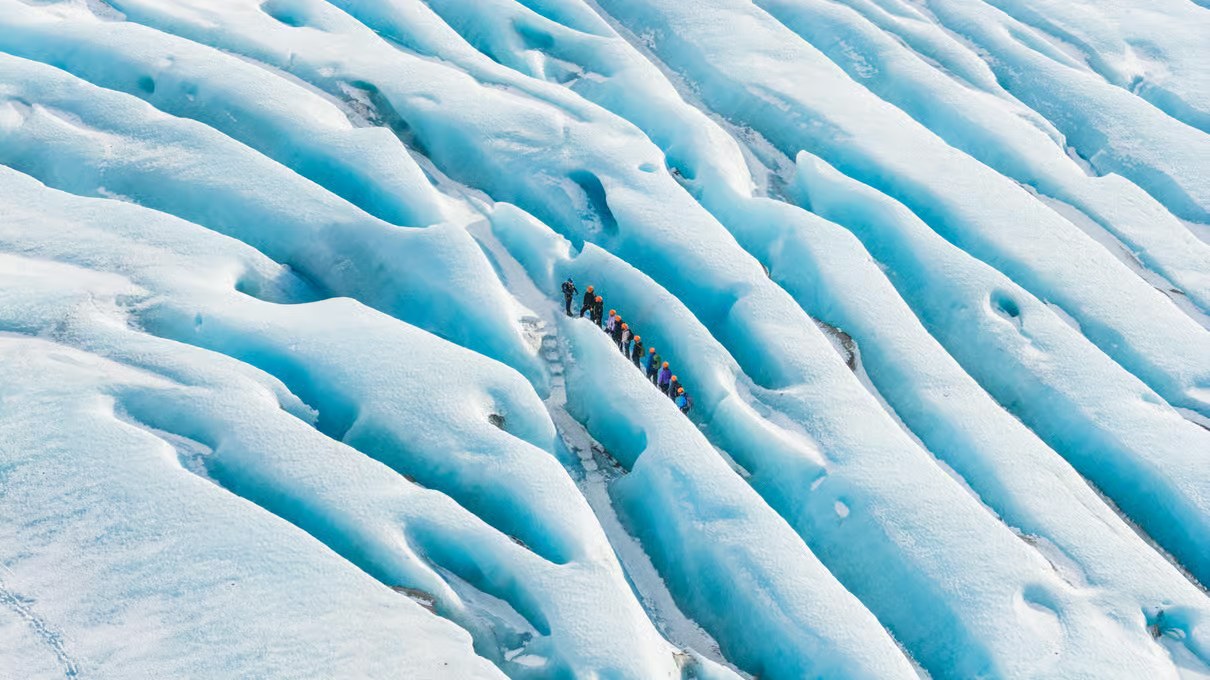
Nearly all of it is on the outlet glaciers of Vatnajökull, Europe's largest glacier by volume, in the south east. Skaftafell is the hub — the Falljökull tongue sits close to the visitor centre and carries most of the traffic — while the Jökulsárlón lagoon car park is the starting point for walks onto Breiðamerkurjökull further east.
Both are a long way from Reykjavik: Skaftafell is roughly 327 km and Jökulsárlón about 380 km, which is four and a half to five hours of driving. Most people fold a hike into a South Coast trip rather than attempting it as a day return.
Hikes with an ice cave, and hikes without
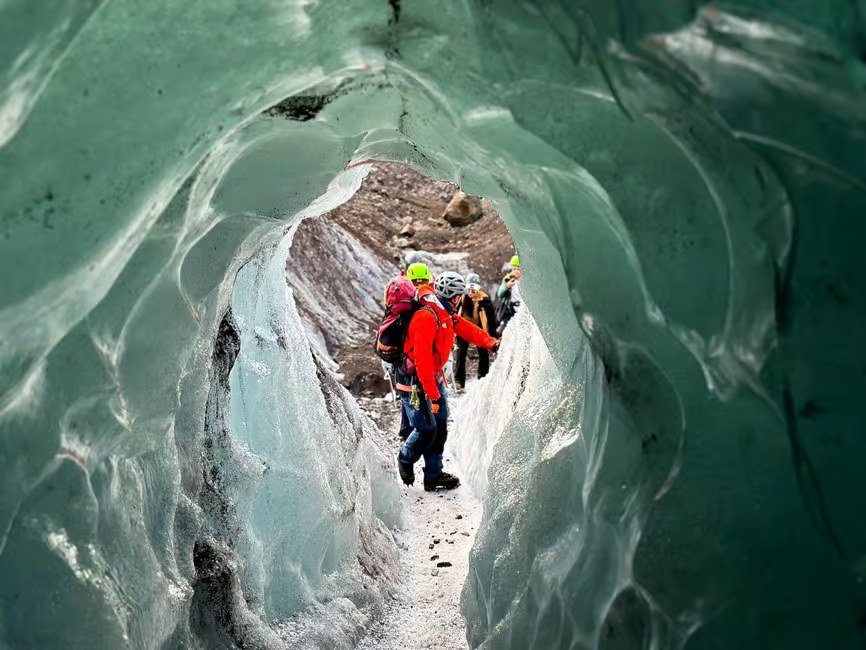
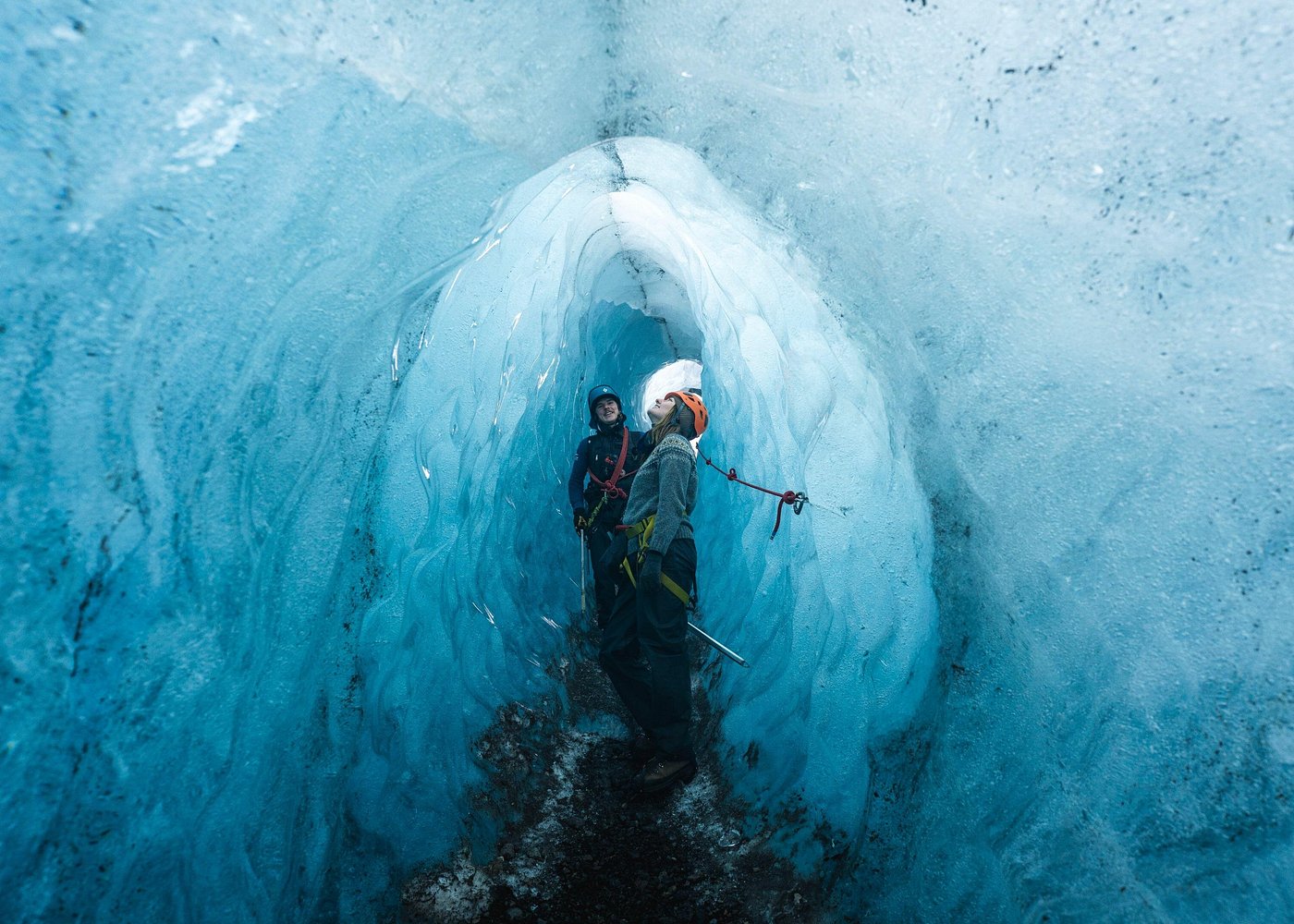
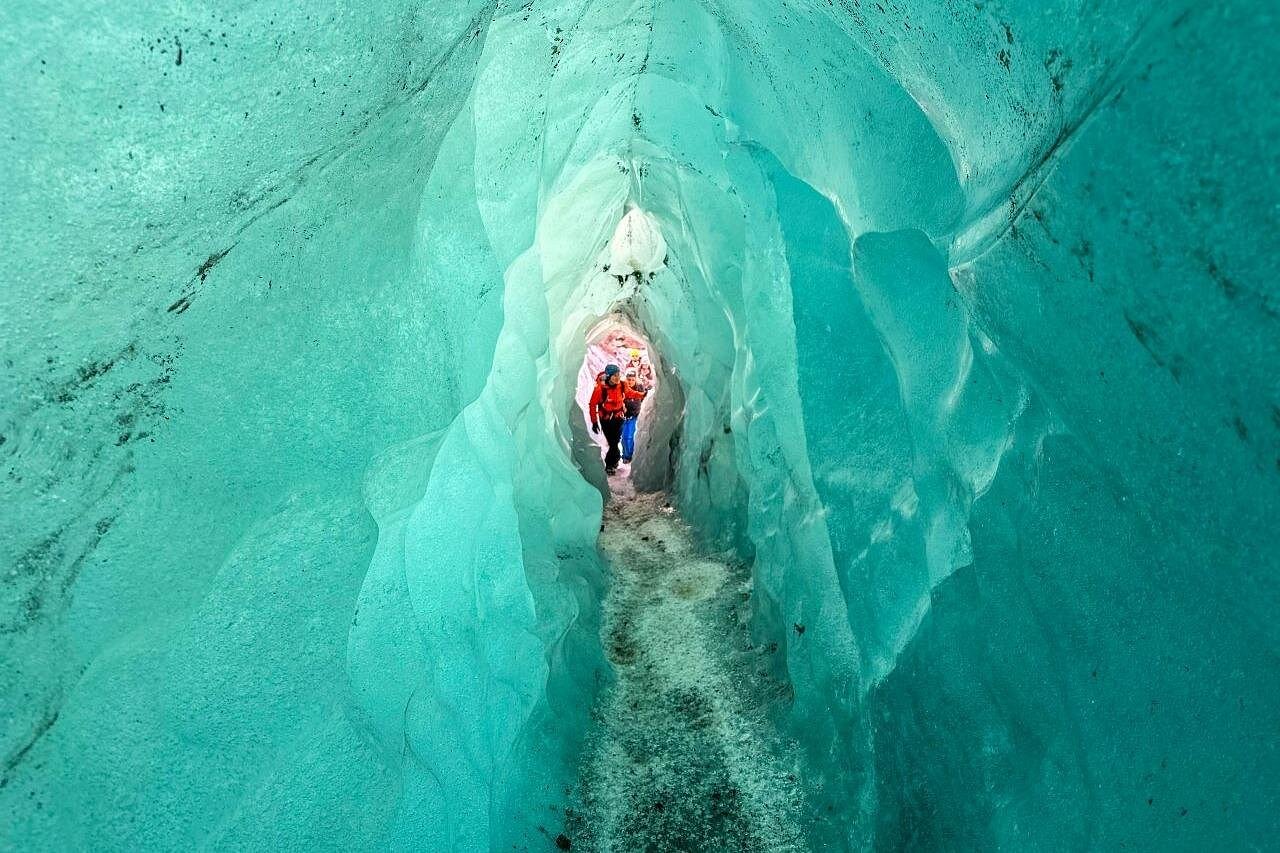
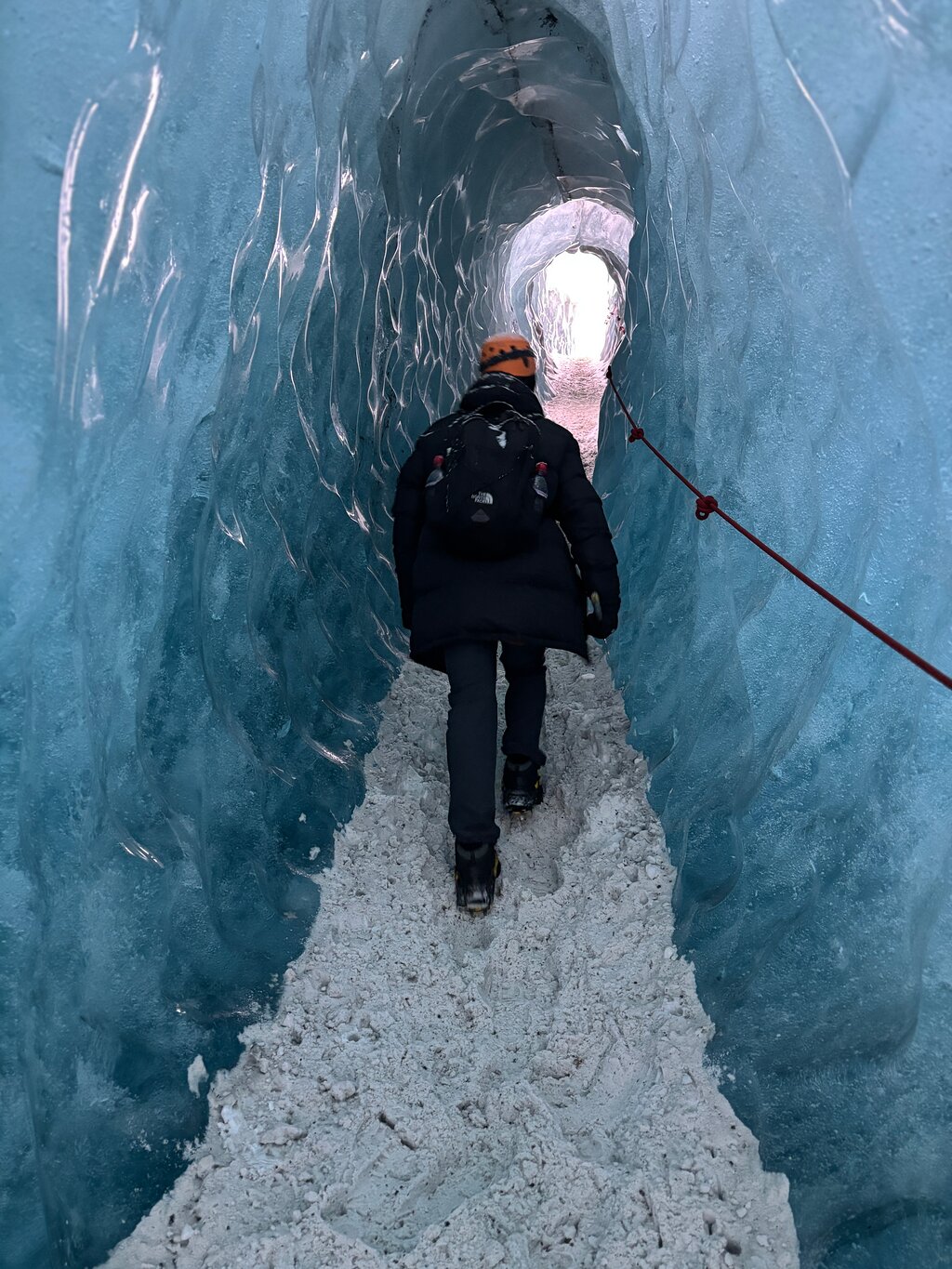
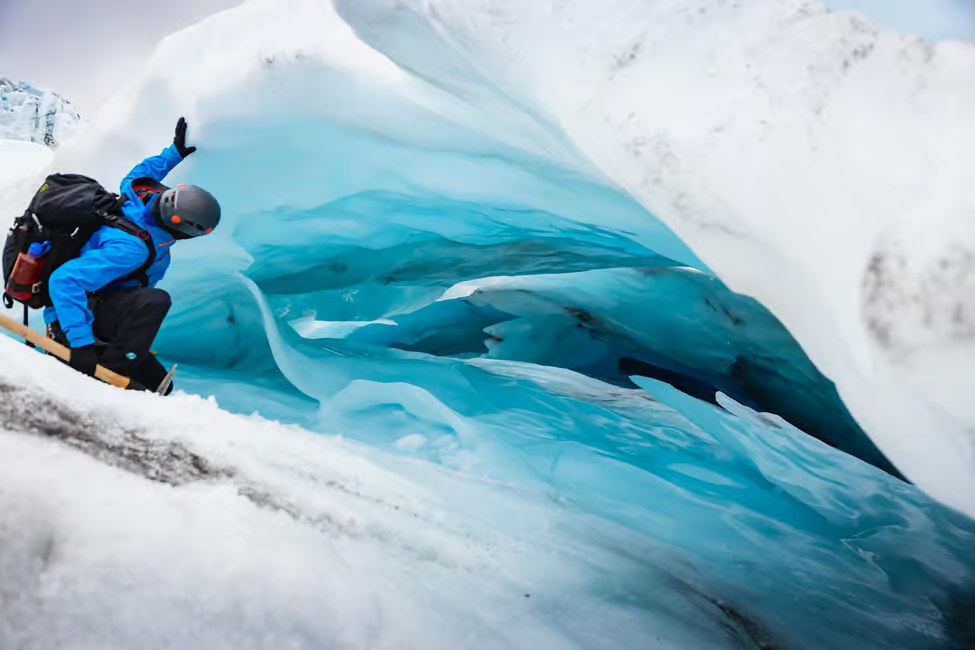
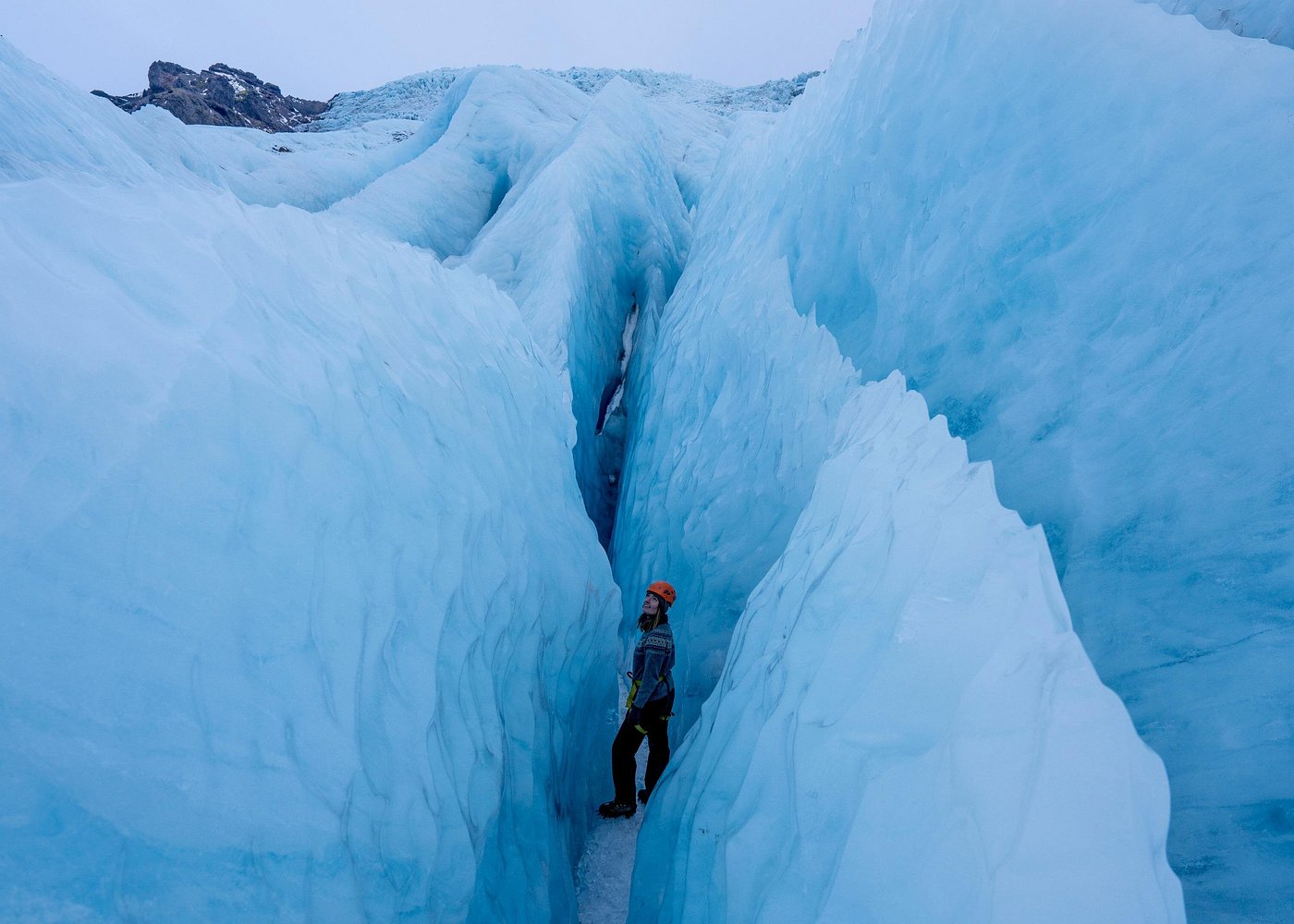
A handful of these tours add a natural ice cave to the walk. It is a genuinely good combination, but it comes with a caveat worth stating plainly: the cave is conditions-dependent. Caves flood after heavy rain and close when the ice softens, so operators swap to a crevasse or a longer walk when the cave is unsafe, and the tour still runs.
Pure glacier hikes have no such dependency. They run year-round, including through the summer when every natural cave in the country has melted shut, which makes them the reliable option outside the winter months.
How hard is a glacier hike?
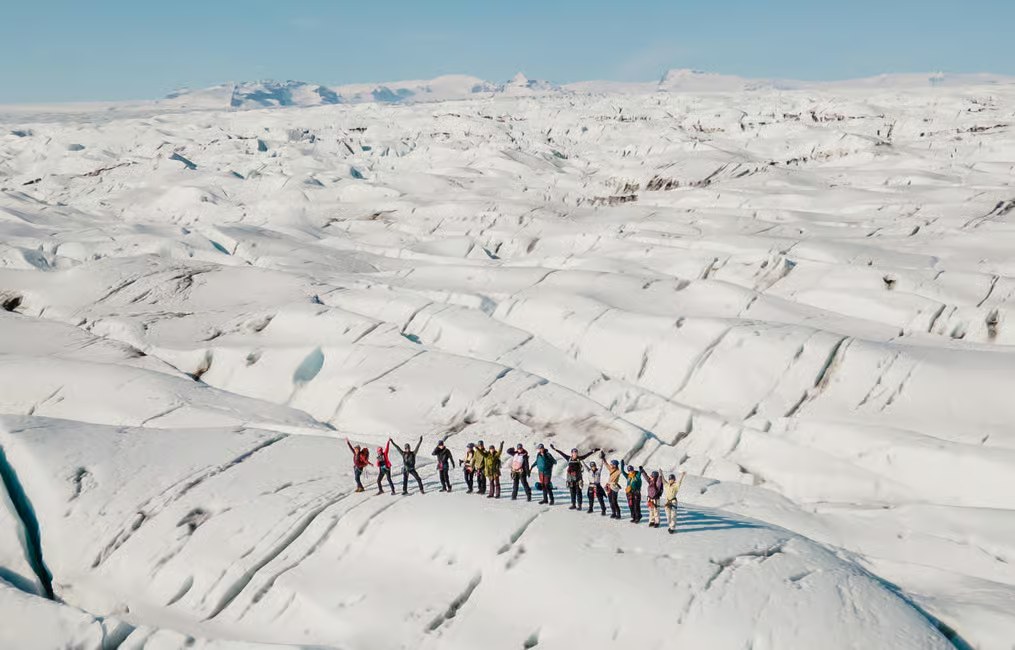
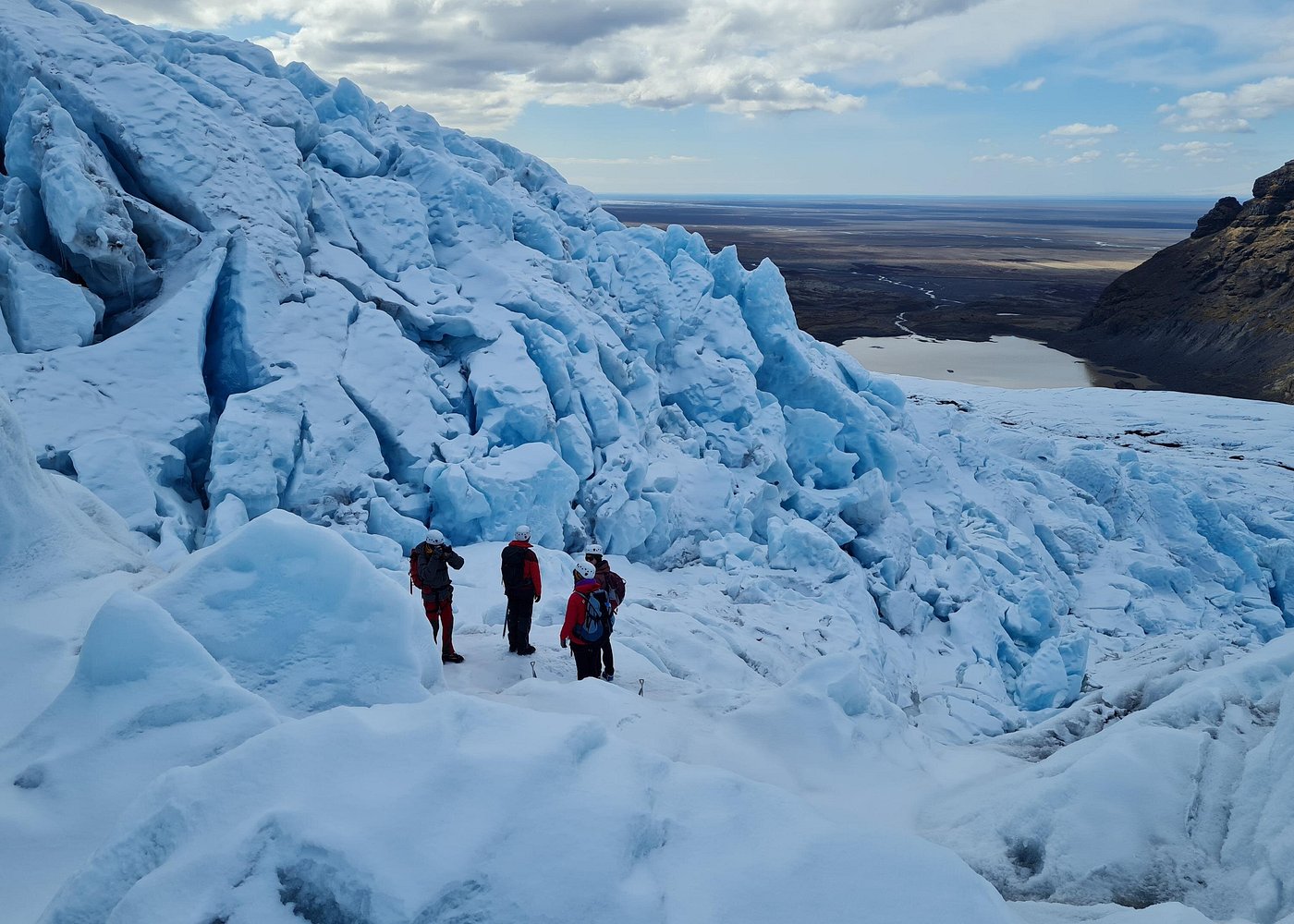
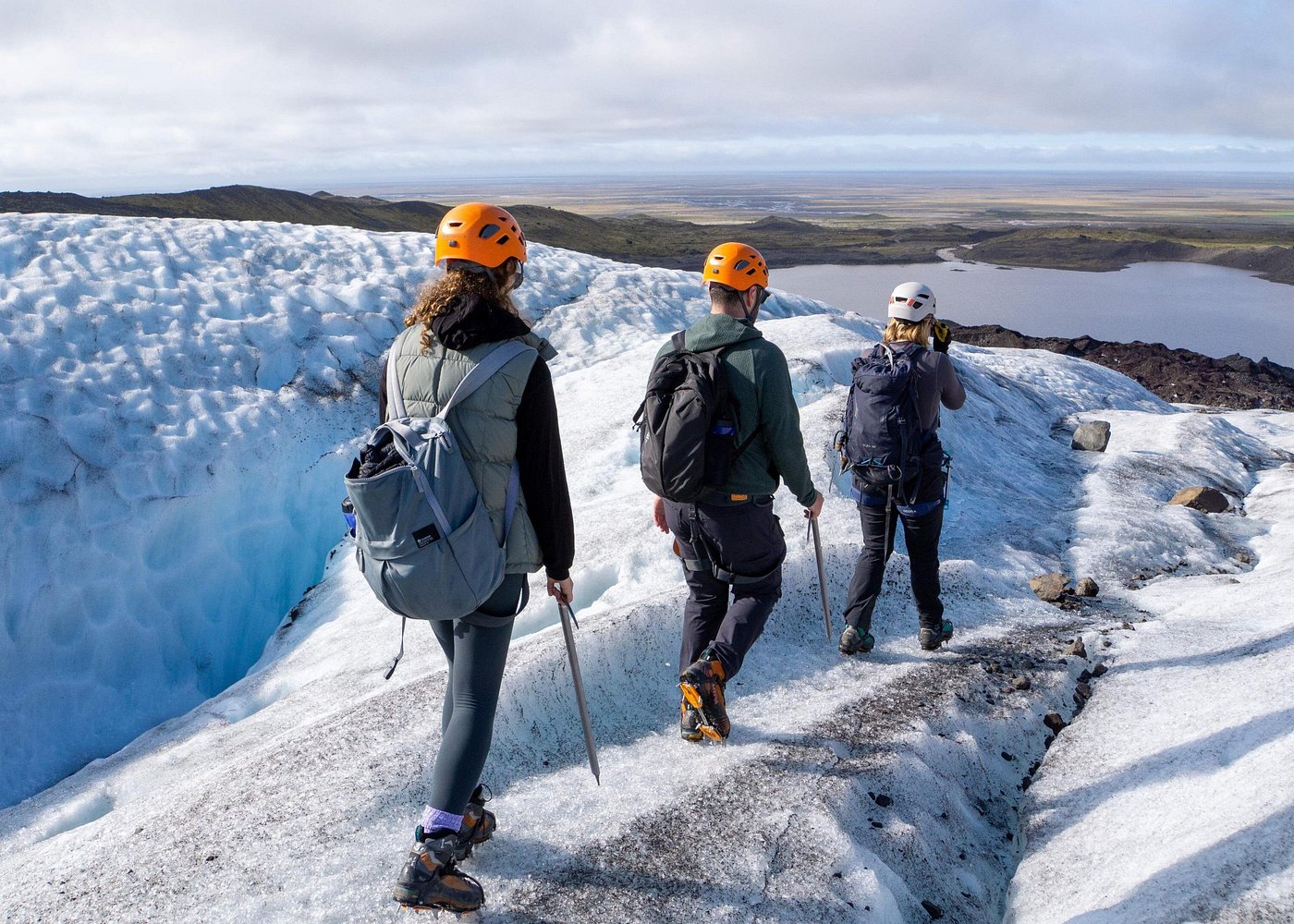
Most are graded easy to moderate. You walk on uneven ice in crampons, usually for two to four kilometres, and no previous experience is expected — the majority of people on any given tour have never been on a glacier. Operators fit crampons, a helmet and a harness at the ice edge and brief the group before setting off.
The longer treks and the extended explorer routes ask for a moderate fitness level and more time on your feet. Where a tour requires it, the operator says so, and the minimum age is typically between 8 and 10.
Boots are the thing people get wrong
Crampons need stiff hiking boots that cover the ankle. Soft trainers, wellingtons and low shoes will not take a crampon binding, and this is the single most common problem at meeting points — reviewers mention being sent to rent boots more often than any other complaint.
Most operators rent boots at the meeting point for a small fee, and some require it if your footwear is unsuitable. Bringing warm layers, a waterproof jacket and trousers is on you; the technical gear is not.
What it costs and which to choose
Hikes start around $96 for a short guided walk and run to roughly $221 for the top-rated small-group cave-and-walk combination. Group size explains most of the difference: the cheapest walks run larger groups, while the highest-rated tours cap at eight to twelve.
For a first time on ice, the easy Falljökull walks from Skaftafell are the obvious start. For the most time on the glacier, look at the extended treks or the small-group half-day. To combine a walk with a cave, take one of the first group above — in winter, when the caves are actually open.